UPI Switch vs NEFT vs RTGS vs IMPS Switch Explained
UPI Switch vs NEFT Switch vs RTGS Switch vs IMPS Switch: Which One Should Your Business Use?
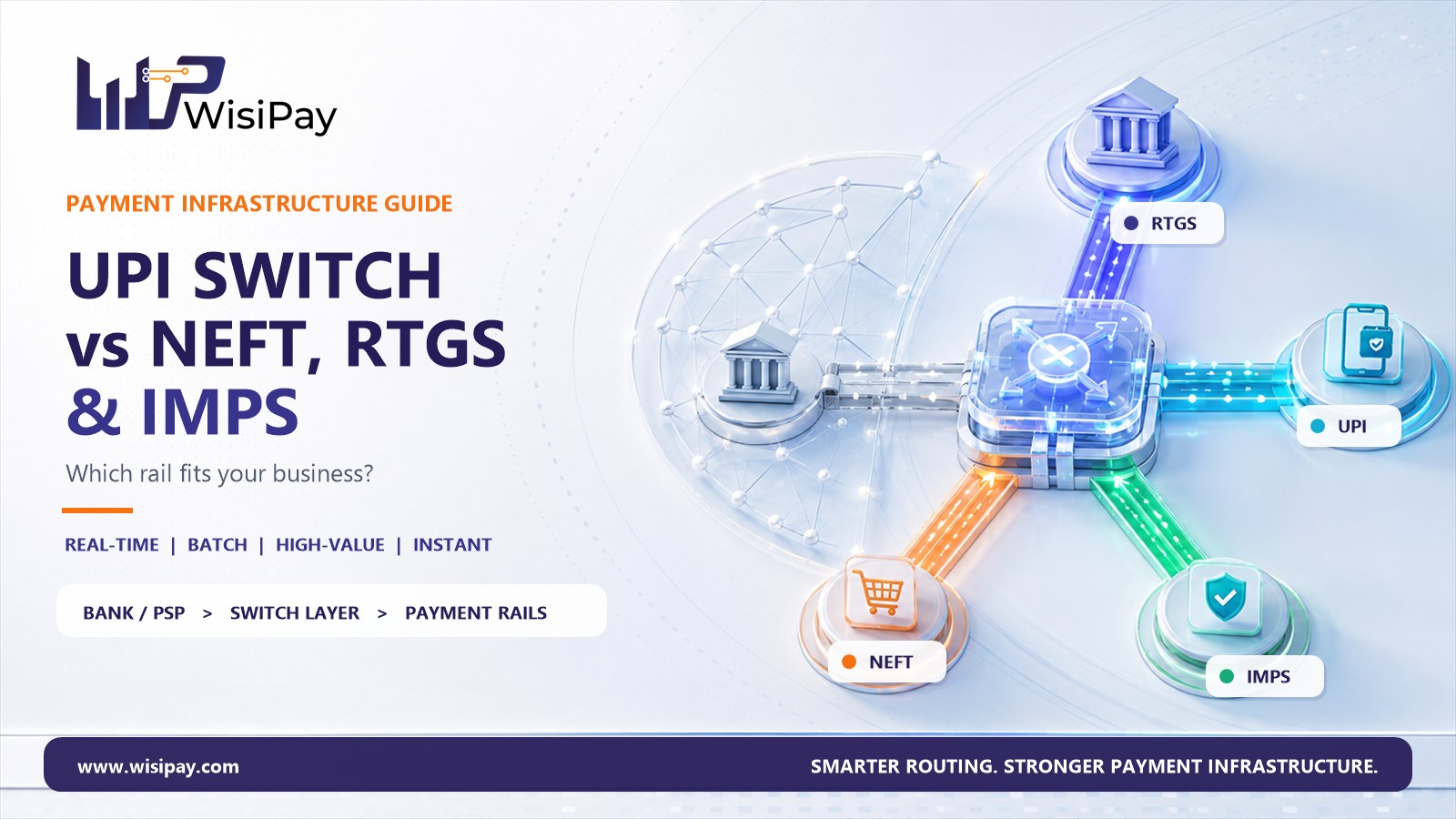
If you're building a payments product, you've probably heard all four terms used almost interchangeably. A UPI Switch, a NEFT Switch, an RTGS Switch, and an IMPS Switch sound like variations of the same thing. They aren't. Each one connects your business to a different payment rail, and each rail behaves in its own way.
Getting this wrong doesn't just cause confusion internally. It can mean picking the wrong integration for your use case. That mistake tends to show up later as downtime, delayed settlements, or a product that can't scale.
What Is a Payment Switch, Exactly?
Before comparing the four, it helps to define the general concept. A payment switch is the infrastructure layer that sits between a bank or payment service provider and the central rail it connects to. That rail could be NPCI or one of RBI's own systems.
Instead of every bank building a direct, one-off connection to every other bank, the switch acts like a smart middle layer. It routes each transaction along the most reliable path. It also absorbs traffic surges during high-demand periods, and reconciles transaction status in near real time. Think of it like DNS resolving a website address, instead of your browser memorizing every server's IP directly.
UPI Switch: Built for Real-Time, High-Volume Traffic
A UPI Switch connects banks, PSPs, and TPAPs (Third-Party Application Providers) directly to NPCI's UPI network. UPI handles enormous transaction volumes, especially during salary days and festive seasons. So the switch does more than just pass requests along.
It monitors backend conditions like server load in real time. Then it dynamically picks the most reliable path for each transaction. During traffic surges, it absorbs the load so core banking systems don't buckle under pressure. It also speeds up reconciliation, so a "pending" transaction resolves quickly instead of leaving the customer and the business guessing.
If your business processes high-frequency, low-to-mid value transactions, especially consumer-facing ones, a UPI Switch is usually the first integration point that matters.
NEFT Switch: Built for Batch-Based, Non-Urgent Transfers
NEFT operates differently from UPI. Rather than settling instantly, NEFT processes transactions in batches throughout the day. However, RBI's 24x7 NEFT window has made this far less restrictive than it used to be.
A NEFT Switch handles the connection and batch-submission logic between your systems and the NEFT settlement cycle. It matters less for split-second speed. It matters more for reliable batch handling, accurate reconciliation across cycles, and correctly managing cut-off timings.
For businesses running payroll, vendor payouts, or other scheduled, non-urgent transfers, NEFT connectivity is often more relevant than instant-rail integration.
RTGS Switch: Built for High-Value, Real-Time Settlement
RTGS exists for transactions where amount and certainty matter more than anything else. Every RTGS transfer settles individually and immediately. The minimum transaction value is ₹2 lakh, with no upper cap.
An RTGS Switch has to prioritize uptime and reliability above almost everything else. There's no batching to fall back on here. A failed connection during an RTGS window can directly delay a high-value settlement. Businesses dealing with large B2B payments, treasury operations, or high-ticket vendor settlements need this connectivity to be dependable, not just fast.
IMPS Switch: Built for Instant, 24x7 Transfers at Any Value
IMPS sits between UPI and RTGS in some ways. It's NPCI's instant, 24x7 payment system, available even on holidays. Transaction limits generally go up to ₹5 lakh, depending on the bank.
An IMPS Switch needs to support instant, one-to-one settlement without the batching NEFT relies on. It also handles a broader value range than typical UPI transactions. For businesses that need guaranteed instant transfers outside UPI's rails, like certain B2B disbursements or wallet-to-bank transfers, this switch does the heavy lifting.
So, Which Switch Does Your Business Actually Need?
Here's the honest answer: most businesses don't need to build or maintain any of these switches directly. That's a job for banks, PSPs, and infrastructure providers who specialize in it.
What actually matters for your business is knowing which rail fits which use case. That way, you pick the right integration partner instead of guessing.
High-volume, consumer-facing, real-time payments → UPI
Scheduled or batch payouts like payroll and vendor payments → NEFT
Large, high-value, time-sensitive settlements → RTGS
Instant transfers at any hour, including holidays → IMPS
Most growing businesses eventually need more than one of these rails working together, not just one in isolation.
Common Questions About Payment Switches
Do I need a separate switch for each rail? Not necessarily. Many businesses work with a single orchestration or payment infrastructure partner that already connects to all four rails, instead of integrating with each one separately.
Which switch matters most for a growing SME? It depends on the payment mix. A business collecting customer payments usually leans on UPI first, while one running payroll or vendor payouts depends more on NEFT and IMPS.
Is RTGS only for banks? No. Any business making large, time-sensitive B2B payments can use RTGS, typically through their banking partner or payment infrastructure provider.
What happens if one rail goes down? With a single-rail integration, a business simply has to wait it out. With an orchestration layer connecting multiple rails, transactions can often be rerouted to a working path instead.
Why This Is Where Orchestration Comes In
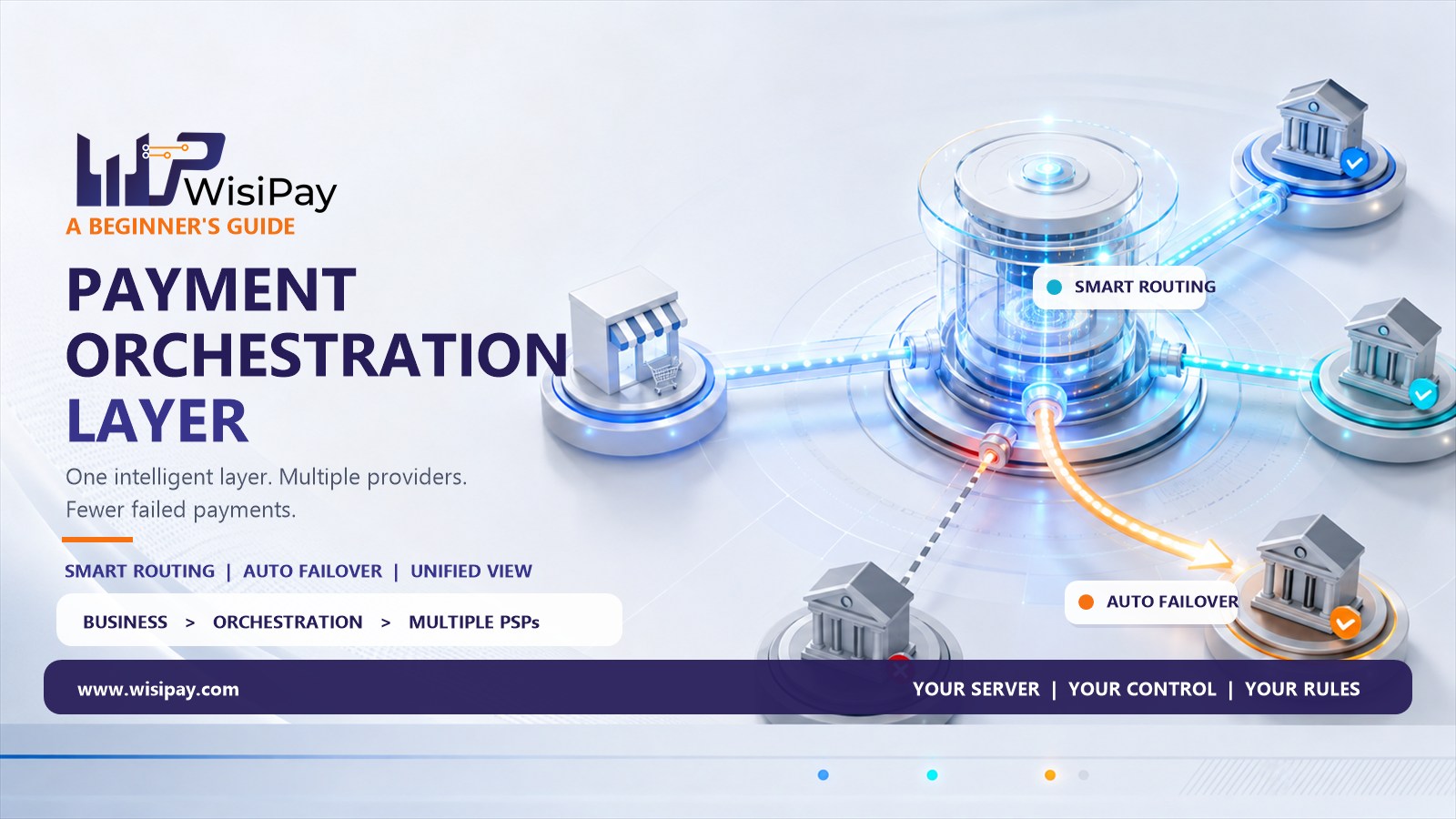
Managing four different switches, four different failure modes, and four different reconciliation processes isn't a reasonable ask for most businesses. This is exactly the gap a payment orchestration layer is built to close.
Instead of integrating separately with each rail and hoping nothing breaks, an orchestration layer sits above all of them. It routes each transaction to the right rail automatically. It falls back when one path is unavailable. It also gives your team a single, unified view of every transaction, regardless of which switch handled it. See how Wisi Pay's orchestration platform brings UPI, NEFT, RTGS, and IMPS together under one layer.
The Bigger Takeaway
UPI Switch, NEFT Switch, RTGS Switch, and IMPS Switch aren't interchangeable terms. Each one is built for a specific kind of transaction, with its own speed, value range, and reliability requirements.
Understanding the difference isn't just a technical exercise. It directly shapes which integration you prioritize and how resilient your payment stack becomes as transaction volume grows. Talk to our team if you want help mapping the right rail to your specific payment flows.
Which of these four rails does your business rely on most right now — and has it ever caused you an unexpected delay?
Sources:
What is UPI Switch? A guide for banks — Pine Labs
What on earth is the UPI switch? — Setu
Bank Transfer Limits 2026 — NEFT, RTGS, IMPS, UPI — IFSCTeam
Himanshu
admin